
Tire Load Index vs Load Range Explained
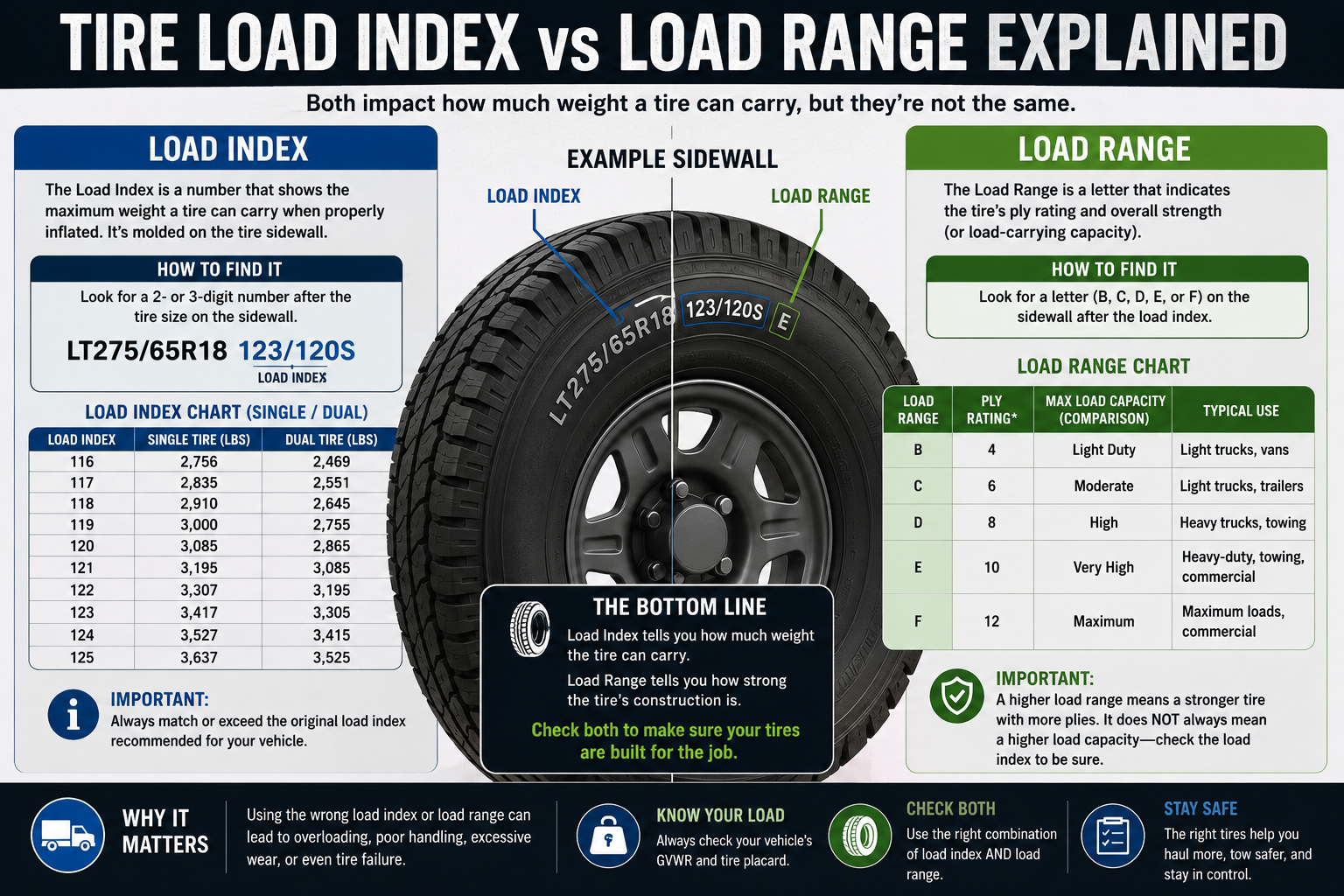
If you’ve ever looked at a tire sidewall and tried to decode what it actually means, you’re not alone. Between numbers, letters, and technical specs, there’s a lot going on. Most drivers overlook these critical details that directly impact safety, performance, and tire life.
Two of the most misunderstood specifications are tire load index and load range. While they both relate to how much weight a tire can handle, they are not interchangeable, and understanding the difference matters.
At the same time, many drivers asking about tire specs are also wondering about tire rotation, because load capacity, wear patterns, and maintenance are all connected. Let’s break it down clearly.
What Is Tire Load Index?
The tire load index is a numerical code that represents the maximum weight a single tire can safely support when properly inflated.
You’ll find it printed directly on the tire sidewall as part of the tire size. For example:
225/65R17 102H
- 102 = Load Index
- This number corresponds to a specific weight (in this case, 1,874 lbs. per tire).
Each number maps to a standardized load capacity chart. The higher the number, the greater the load the tire can carry.
Why It Matters
Load index isn’t just a spec. It directly affects:
- Vehicle safety under load
- Braking performance
- Tire wear and heat buildup
- Suspension stress
Installing tires with a lower load index than your vehicle requires can lead to premature failure or unsafe driving conditions.
What Is Load Range?
The load range is a letter-based rating that indicates a tire’s construction strength and maximum inflation pressure, rather than a specific weight.
Common examples include:
- Load Range SL (Standard Load): Passenger vehicles
- Load Range XL (Extra Load): Reinforced passenger tires
- Load Range C, D, E: Typically used for light trucks and commercial vehicles
Unlike load index, load range reflects the tire’s internal structure and durability, not just its weight capacity.
The Key Difference
- Load Index = Exact weight capacity (numerical, precise)
- Load Range = Structural strength category (letter-based, broader)
They often work together, but they’re not substitutes.
How Load Index and Load Range Work Together
A tire can have:
- A higher load index because it’s built stronger
- A higher load range because it’s designed for higher pressure and durability
For example:
- A passenger tire might have a load index of 95 (1,521 lbs.).
- A light truck tire might use Load Range E with significantly higher pressure tolerance.
The takeaway: Always match both specifications to your vehicle requirements, not just one.
How This Connects to Tire Rotation
Now here’s where things get practical.
If your tires are carrying uneven loads, or if your vehicle naturally distributes weight unevenly (which most do), you’ll see uneven wear patterns over time.
That’s why one of the most common questions is:
How Often Should You Rotate Your Tires?
The general rule:
- Every 5,000 to 7,500 miles, or
- During routine services like oil changes
Why Tire Rotation Matters
Regular tire rotation helps:
- Even out wear across all four tires
- Extend tire lifespan
- Maintain consistent traction and handling
- Protect your investment, especially when running higher load-rated tires
Front tires typically wear faster due to:
- Engine weight
- Steering forces
- Braking load
Without rotation, even properly rated tires (correct load index and load range) will wear unevenly and lose performance faster.
Load Ratings, Wear Patterns, and Real-World Driving
In real driving conditions around Taneytown and Central Maryland, your tires deal with:
- Stop-and-go traffic
- Seasonal temperature changes
- Road surface variations
- Occasional heavy loads (passengers, cargo, towing)
If your tires aren’t properly rated (or if they’re not rotated regularly), you’ll notice:
- Edge wear or cupping
- Reduced fuel efficiency
- Increased road noise
- Shortened tire life
That’s why understanding specs like load index and load range isn’t just technical. It directly impacts your maintenance schedule and long-term costs.
How to Read Tire Size (And Where These Specs Appear)
If you’re still unsure where to find this information, it’s part of your tire size format.
Example again:
225/65R17 102H
- Tire width: 225 mm
- Aspect ratio: 65
- Construction: Radial
- Wheel size: 17 inches
- Load Index: 102
- Speed rating: H
If you need a full breakdown, check out our guide on how to read tire size. It walks through every part of the sidewall so you can make informed decisions when replacing tires or using tools to shop for tires online.
Choosing the Right Tires for Your Vehicle
When selecting new tires, don’t just focus on brand or price. You need to match:
- Load index (minimum requirement)
- Load range (based on usage and vehicle type)
- Driving conditions (commuting, towing, off-road, etc.)
At Taneytown Tire & Auto, we help drivers:
- Compare tire options across leading brands
- Understand load ratings and performance differences
- Use our online catalog to shop tires online by vehicle or size
- Install, balance, and calibrate tires correctly
We also ensure your tire pressure monitoring system (TPMS) is properly synced after installation or rotation with our TPMS service.
When to Schedule Service
If you’re unsure about your current tires or maintenance schedule, it’s time to take action. You should schedule service if:
- You don’t know your last tire rotation.
- You’re seeing uneven wear.
- Your vehicle feels unstable under load.
- Your TPMS light is on.
- You’re planning to replace tires and need guidance.
Financing Higher Load-Rated Tires Can Prevent Costly Mistakes
Tires with higher load ratings and reinforced construction often cost more upfront, especially for trucks, SUVs, towing applications, and heavier vehicles. But choosing the wrong load index or load range to save money can lead to faster wear, poor handling under load, and premature tire failure.
That’s why many drivers choose to finance tires directly through their local tire shop. Financing makes it easier to purchase the correct tire for the vehicle instead of compromising on load capacity or durability.
This is especially important for:
- Trucks used for towing
- SUVs carrying heavy passenger loads
- Commercial or work vehicles
- Drivers upgrading to reinforced or extra-load tires
In many cases, financing allows drivers to replace all four tires together, helping maintain consistent load handling, traction, and wear patterns.
Why Tire Shops Matter More Than Big-Box or Dealership Installers
Load index and load range are often misunderstood, and installing the wrong tire setup can create long-term wear and performance problems.
Dedicated tire shops typically spend more time evaluating:
- Vehicle load requirements
- Towing and hauling use
- Tire wear patterns
- Inflation pressure needs
- Rotation schedules tied to heavier loads
Instead of simply matching a tire size, experienced tire shops help drivers choose a setup that actually fits how the vehicle is used in the real world.
For drivers carrying heavier loads or towing regularly, that expertise can make a major difference in tire lifespan, ride stability, and long-term maintenance costs.
Work with a Tire Shop That Gets It Right
At Taneytown Tire & Auto, we don’t just install tires. We make sure they’re the right fit for your vehicle, driving conditions, and long-term reliability.
From helping you shop for tires online to performing expert installation, balancing, alignment, and TPMS service, our team is here to keep you moving safely.
Book your appointment today or request a tire quote to get started.