
Why Are My Tires Wearing Unevenly?
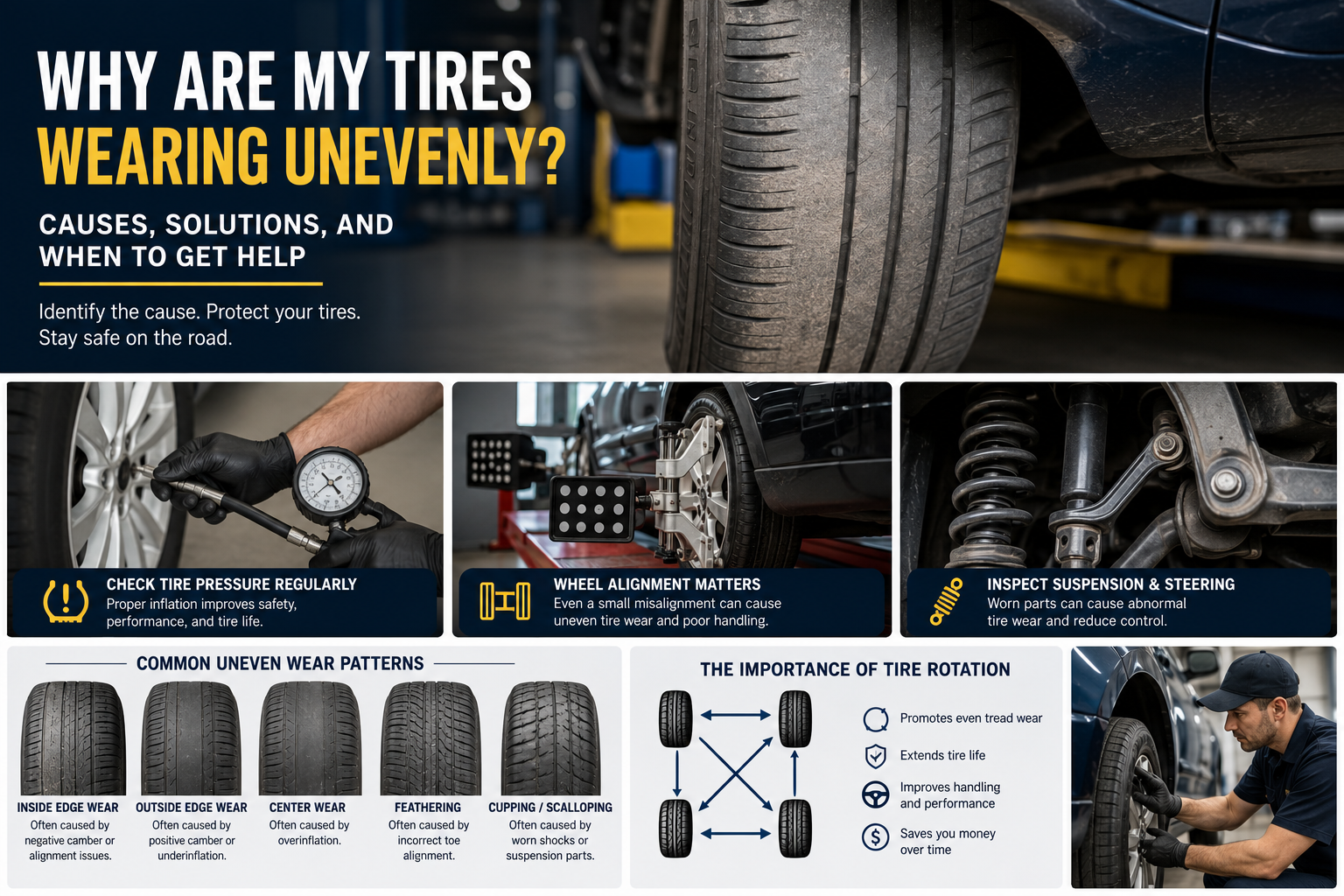
Why Are My Tires Wearing Unevenly?
You expect your tires to wear down gradually over tens of thousands of miles. What you don’t expect is to discover that one tire is nearly bald on the inside edge while the rest of the tread still looks healthy, or that your front tires are wearing much faster than the rear. Uneven tire wear is one of the most common concerns drivers bring into an auto repair shop, and it’s rarely just a tire problem.
In most cases, uneven tread wear is your vehicle’s way of telling you that something else needs attention. Wheel alignment, worn suspension components, incorrect tire pressure, damaged steering parts, and even driving habits can all cause tires to wear prematurely. Replacing the tires without fixing the underlying issue often leads to the exact same problem happening again.
At Taneytown tire we inspect uneven tire wear every day for drivers throughout Taneytown, Westminster, Hampstead, and the surrounding Carroll County communities. Our goal isn’t simply to sell new tires—it’s to identify why the wear occurred in the first place so you get the maximum life out of your next set.
Your Tires Tell a Story
One of the first things an experienced technician does during a tire inspection is simply look at the tread. Different wear patterns provide valuable clues about what’s happening underneath the vehicle.
Unlike many mechanical problems that remain hidden until something breaks, tires record thousands of miles of driving. Every turn, bump, pothole, hard stop, and suspension movement leaves a pattern behind. Learning to recognize those patterns helps technicians pinpoint issues before they become much more expensive repairs.
Think of your tires as the vehicle’s footprint. Because they’re the only part of your car that actually touches the road, even a small change in suspension geometry or steering alignment will eventually appear in the tread.
That’s why we always recommend inspecting the entire steering and suspension system before replacing tires showing abnormal wear. If you’re already shopping for replacement tires, our online tire center makes it easy to compare leading tire brands while our technicians ensure the underlying problem has been corrected first.
Common Tire Wear Patterns and What They Mean
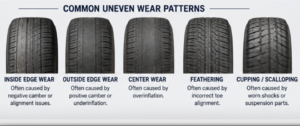
Not all uneven tire wear looks the same. In fact, the location of the wear often points directly toward the mechanical issue causing it.
Inside Edge Wear
One of the most common patterns we see is excessive wear along the inside shoulder of the tire.
This usually indicates an alignment issue involving excessive negative camber or incorrect toe settings. Imagine the top of the tire leaning inward slightly. Instead of the entire tread contacting the pavement evenly, much of the vehicle’s weight shifts toward the inside edge. Over thousands of miles, that narrow section experiences considerably more friction than the rest of the tire.
Drivers are often surprised because the tire may appear perfectly normal unless they crawl underneath the vehicle and inspect the inside shoulder.
Outside Edge Wear
Wear along the outside edge commonly points toward excessive positive camber, chronic underinflation, or aggressive cornering.
Underinflated tires flex more as they roll, causing the shoulders to carry more of the vehicle’s weight. This increases heat buildup while accelerating wear on both outer edges.
Center Tread Wear
If the center of the tread wears much faster than the shoulders, overinflation is often responsible.
Too much air pressure causes the center of the tire to bulge outward slightly, reducing the amount of rubber contacting the road. Although the difference is small, it becomes very noticeable after thousands of miles.
Maintaining the manufacturer’s recommended tire pressure—not simply the maximum pressure printed on the sidewall—is one of the easiest ways to maximize tire life.
Feathering
Run your hand across the tread.
If one direction feels smooth while the opposite direction feels sharp or jagged, the tire may be feathering.
Feathering is usually associated with improper toe alignment and often develops before drivers notice any obvious handling concerns.
Cupping or Scalloping
Instead of wearing evenly, the tread develops a series of high and low spots around the circumference of the tire.
This pattern usually indicates the tire is bouncing instead of maintaining consistent contact with the road.
Common causes include:
- Worn shocks
- Worn struts
- Loose suspension components
- Wheel imbalance
- Damaged steering components
Drivers frequently describe this as a humming or roaring noise that gradually becomes louder as vehicle speed increases.
Wheel Alignment Is Often the Root Cause
If someone asks us why their tires are wearing unevenly, wheel alignment is usually one of the first things we investigate.
Alignment refers to the precise angles at which each wheel contacts the road. Modern alignment equipment measures these angles to fractions of a degree. Even a small deviation from the manufacturer’s specifications can dramatically shorten tire life.
Three primary alignment angles affect tire wear:
Camber
Camber describes how much the tire leans inward or outward when viewed from the front of the vehicle.
Too much negative camber places excessive load on the inside edge.
Too much positive camber shifts weight toward the outside shoulder.
Neither condition allows the tread to wear evenly.
Toe
Toe refers to whether the front edges of the tires point slightly inward or outward.
Although the adjustment is incredibly small, incorrect toe settings literally cause the tires to scrub sideways as they roll down the road.
This is one of the fastest ways to destroy a relatively new set of tires.
Caster
Caster primarily affects steering stability and return-to-center characteristics rather than direct tread wear.
However, incorrect caster angles can contribute to pulling, wandering, and uneven handling, especially when combined with worn suspension components.
What Causes Alignment Problems?
Many people assume wheel alignment only changes after a collision.
In reality, alignment gradually changes throughout the life of the vehicle.
Common causes include:
- Hitting potholes
- Striking curbs while parking
- Driving over road debris
- Worn suspension bushings
- Ball joint wear
- Tie rod wear
- Replacing suspension components
- Normal wear over time
Here in Maryland, freeze-thaw cycles create potholes that can significantly affect alignment. Even a single impact with a deep pothole can shift alignment enough to begin wearing a tire unevenly.
If your steering wheel is crooked, the vehicle pulls to one side, or you’ve recently hit a pothole, scheduling a professional wheel alignment can often prevent hundreds of dollars in premature tire replacement.
Suspension Problems Can Wear Out Tires Just as Quickly
Your suspension system does much more than provide a comfortable ride.
Its primary job is keeping each tire firmly planted on the road.
Every component works together:
- Ball joints
- Tie rod ends
- Control arms
- Bushings
- Wheel bearings
- Shocks
- Struts
- Sway bar links
When one component develops excessive play, the wheel no longer follows the precise path intended by the manufacturer.
Instead, the tire may tilt, bounce, or move slightly every time it encounters a bump.
These tiny movements repeat thousands of times during normal driving, eventually creating abnormal tread wear.
Replacing tires without repairing worn suspension parts almost always results in the new tires developing the exact same wear pattern.
Tire Pressure Is More Important Than Many Drivers Realize
Improper tire pressure affects nearly every aspect of vehicle performance.
When tires are underinflated, the shoulders flex excessively while generating additional heat. That extra flex not only wears the outside edges faster but also increases rolling resistance, reducing fuel economy.
Overinflated tires create the opposite problem.
Instead of the entire tread contacting the pavement evenly, the center carries more of the vehicle’s weight. This reduces traction while accelerating center tread wear.
Even being 5 to 8 PSI outside the manufacturer’s recommended pressure can noticeably reduce tire life over time.
Although modern vehicles include Tire Pressure Monitoring Systems (TPMS), the warning light generally activates only after pressure has already fallen significantly below specification.
Routine TPMS inspections and tire pressure checks help ensure your sensors are operating correctly while maximizing both safety and tire longevity.